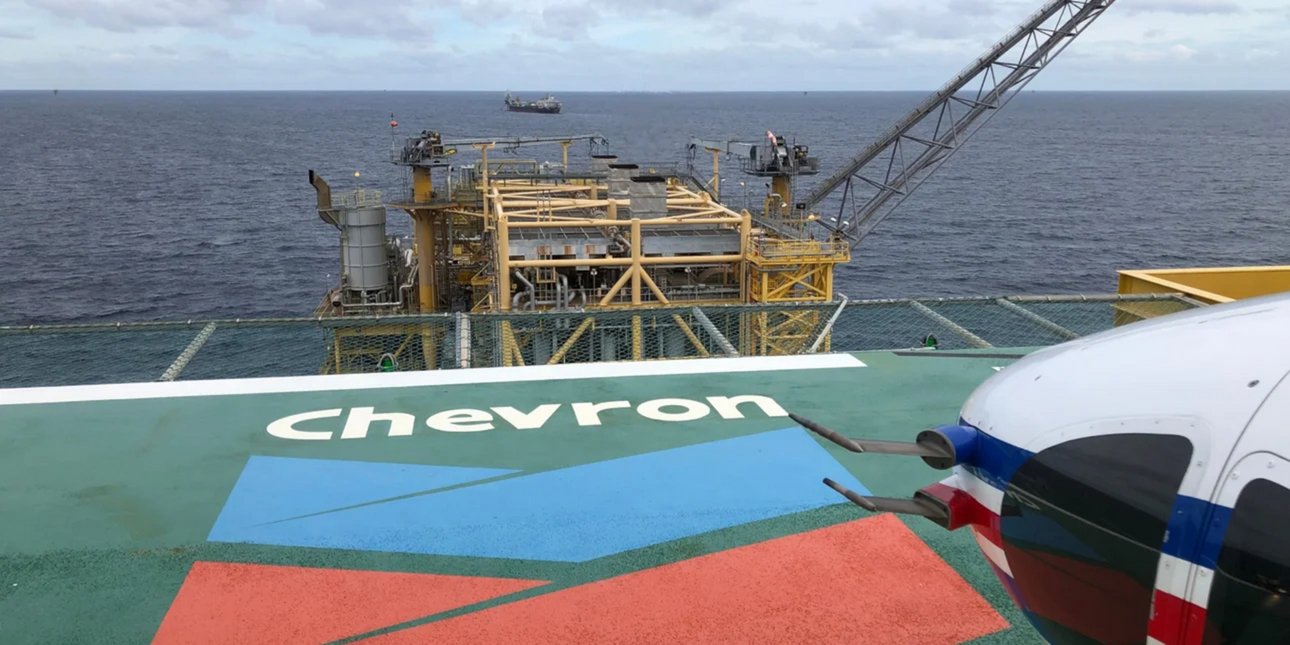
For decades, Greece imported almost all of its oil and gas while its own seabed went largely unexplored.
That is starting to change.
Two of America's biggest energy companies are now racing to find out whether the country is sitting on reserves that could help supply Europe.
A survey ship working for Chevron and Greek refiner HELLENiQ ENERGY began mapping the seabed off the southern Peloponnese on Friday.
Further north, the port of Igoumenitsa is being prepared as a base for Greece's first deep-water exploratory well, which Energean, ExxonMobil and HELLENiQ ENERGY plan to drill in the Ionian Sea in April 2027.
It will be the country's first offshore exploration well in nearly 40 years.
The stakes go beyond Greece.
Since Russia's invasion of Ukraine cut off much of Europe's gas supply, the European Union has scrambled for new sources closer to home. A commercial discovery in Greek waters would give the bloc a new supplier inside its borders and reinforce Greece's bid to become an energy hub for southeastern Europe.
The presence of both Chevron and ExxonMobil also gives Washington a direct stake in the eastern Mediterranean.
The search runs straight into the region's maritime disputes. Chevron has postponed surveys in two blocks south of Crete, likely until 2027.
One of them stretches to the median line with Libya, in waters covered by a 2019 Turkey-Libya maritime deal that Greece rejects as illegal.
The delay comes as Turkey challenges seabed surveys for a planned power cable linking Greece and Cyprus.
The current survey by the TGS vessel Ramform Tethys is due to finish by late January. Chevron plans to combine its data with results from the nearby Block 10 before deciding where to drill.
If the Ionian well finds gas, ExxonMobil will take charge of developing it.