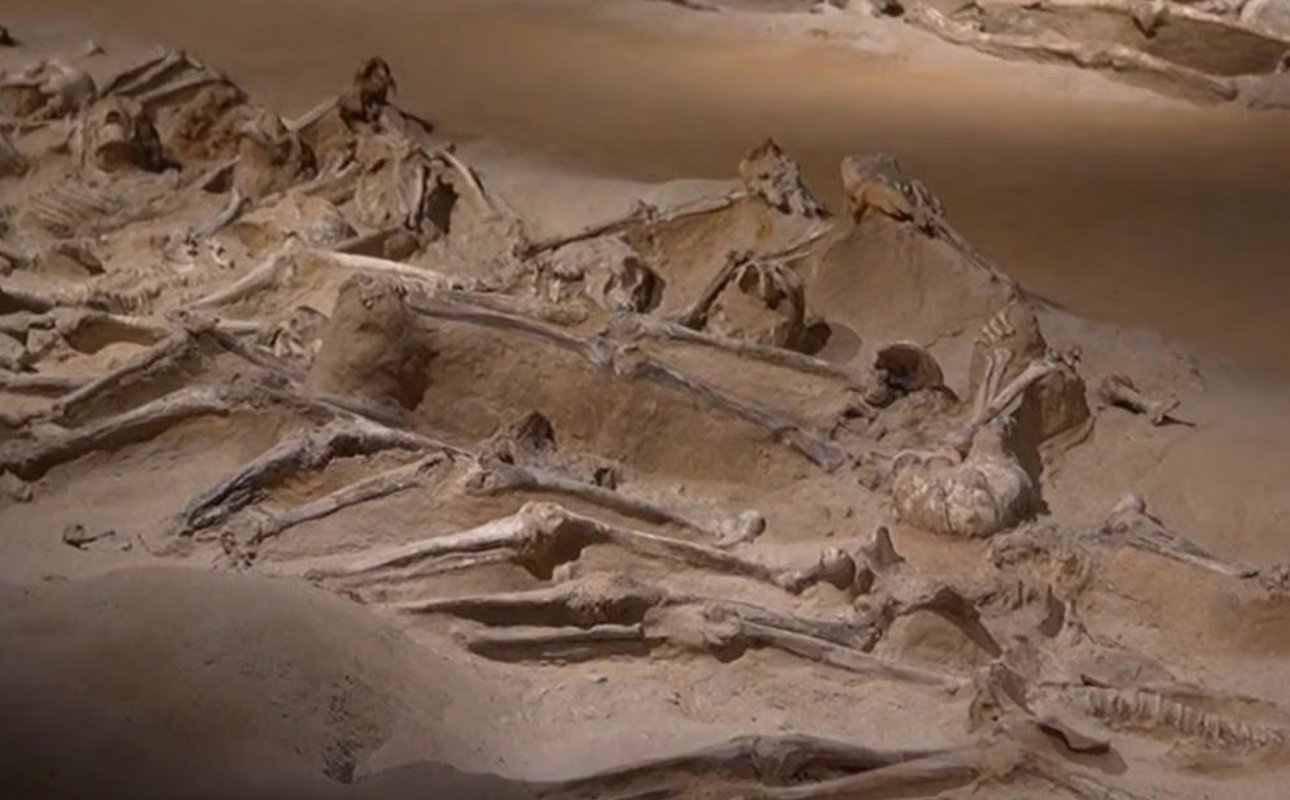
Visitors in Athens can see a mass grave of 79 men starting Thursday.
The men were bound at the wrists and appear to have been executed about 2,600 years ago, and some scholars link them to the city's first recorded attempt to seize power.
Culture Minister Lina Mendoni opened the site, known as the "Phaleron Captives," on Wednesday.
It sits in a purpose-built shelter at the Stavros Niarchos Foundation Cultural Center on the Athens waterfront, and a new visitor information center opened alongside it.
"What is on view is not an ordinary archaeological exhibit, but the human remains of 79 people who met a violent and tragic death," Mrs. Mendoni said. She said the site was designed to bear historical witness rather than to impress.
Visitors will be briefed beforehand, and space has been set aside for quiet reflection.
The men were found during rescue excavations from 2012 to 2020, carried out while the cultural center was being built.
Those digs uncovered the ancient Phaleron cemetery, which held 2,132 burials spanning the 8th to the 4th centuries B.C.
The 79 men lay side by side in three shallow trenches. Most were young or middle-aged, and a few were teenagers.
All had their hands tied, either at the wrists or behind their backs. Their bones show signs of a violent death, and studies suggest they were healthy men who were abused before they were killed.
The grave dates to the late 7th century B.C. Many scholars believe the men may have been followers of Cylon, an Athenian nobleman whose failed coup ended in the killing of his supporters.
Their identity has not been proven.
The site is open daily except Tuesdays.