The rooster on the label of Kokkinos Winery is a family joke.
The winery's cellars sit in a building that was once one of the region's first commercial egg farms, home to more than 2,000 hens.
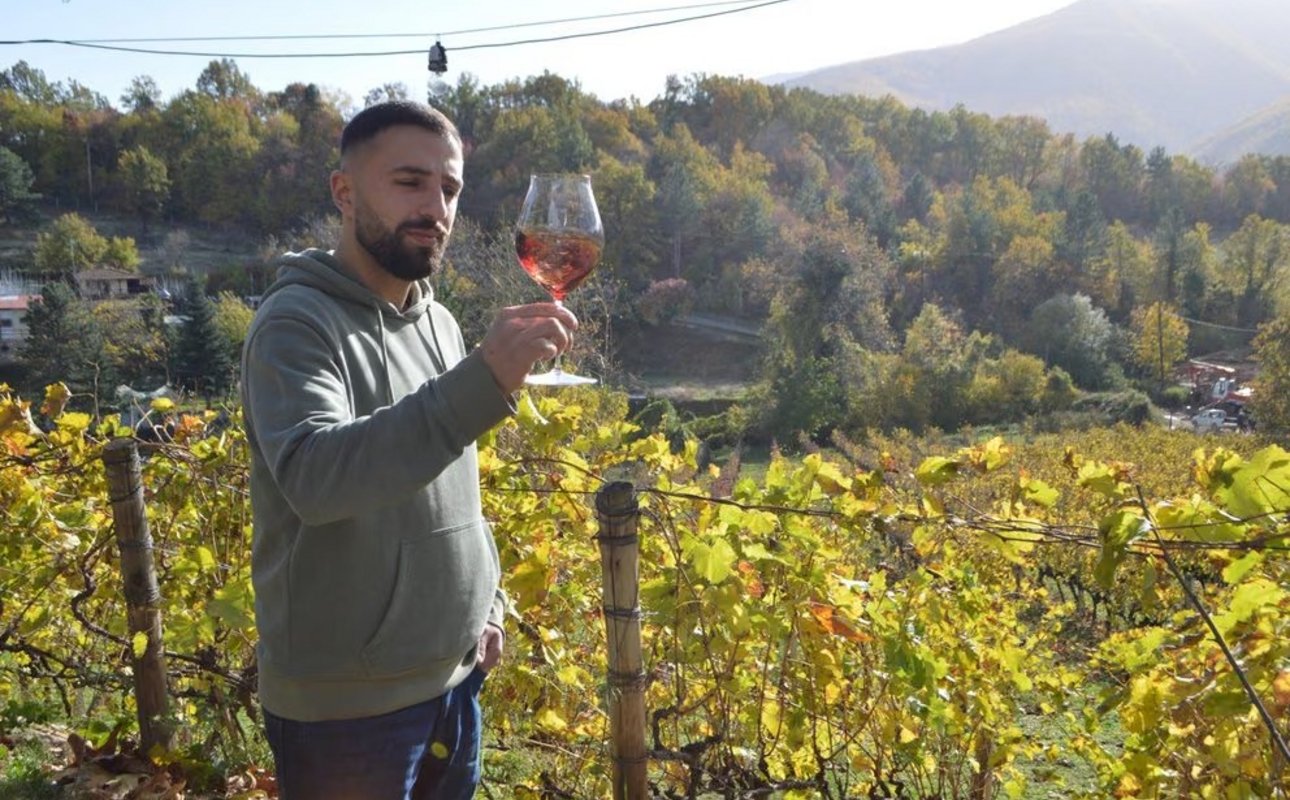
"I represent the fourth generation on this spot," said Konstantinos Kokkinos, who runs the winery outside Naoussa with his brother, Giorgos. Naoussa, in northern Greece, is the historic home of Xinomavro, the country's best-known red grape.
The family story begins in the United States.
Mr. Kokkinos' great-grandfather returned from America and bought the land. His grandfather opened the egg farm in 1965 and ran it until 1980.
The family then grew apples, peaches and cherries.
In 1999, his father found and bought a 2.5-acre plot in Paliokalias, a prized vineyard area on the edge of a forest. Its vines are now about 55 years old.
He turned the old henhouse into a winery in 2008, and the first official vintage followed in 2009. The winery shipped its first bottles to the United States in 2014.
The brothers joined in 2023 and began experimenting with an outside winemaking team. One result is a fresher, easier-drinking Xinomavro called "X," aimed at foreign markets. Its first vintage, in 2024, came to just 920 bottles.
The winery makes six labels.
They include a pair called "Petinoi," an old local word for rooster that Mr. Kokkinos says reminds him of how his grandmother spoke.
Xinomavro is famously tannic and slow to age.
Mr. Kokkinos says that is what makes it worth the effort.
"It allows us to experiment," he said. It can be made sparkling, rosé, red or even white.
Naoussa, a town of fewer than 15,000 people, now has about 27 wineries.
It also draws visitors with its restaurants and its carnival traditions.
Nearby is ancient Mieza, where Aristotle taught Alexander the Great.