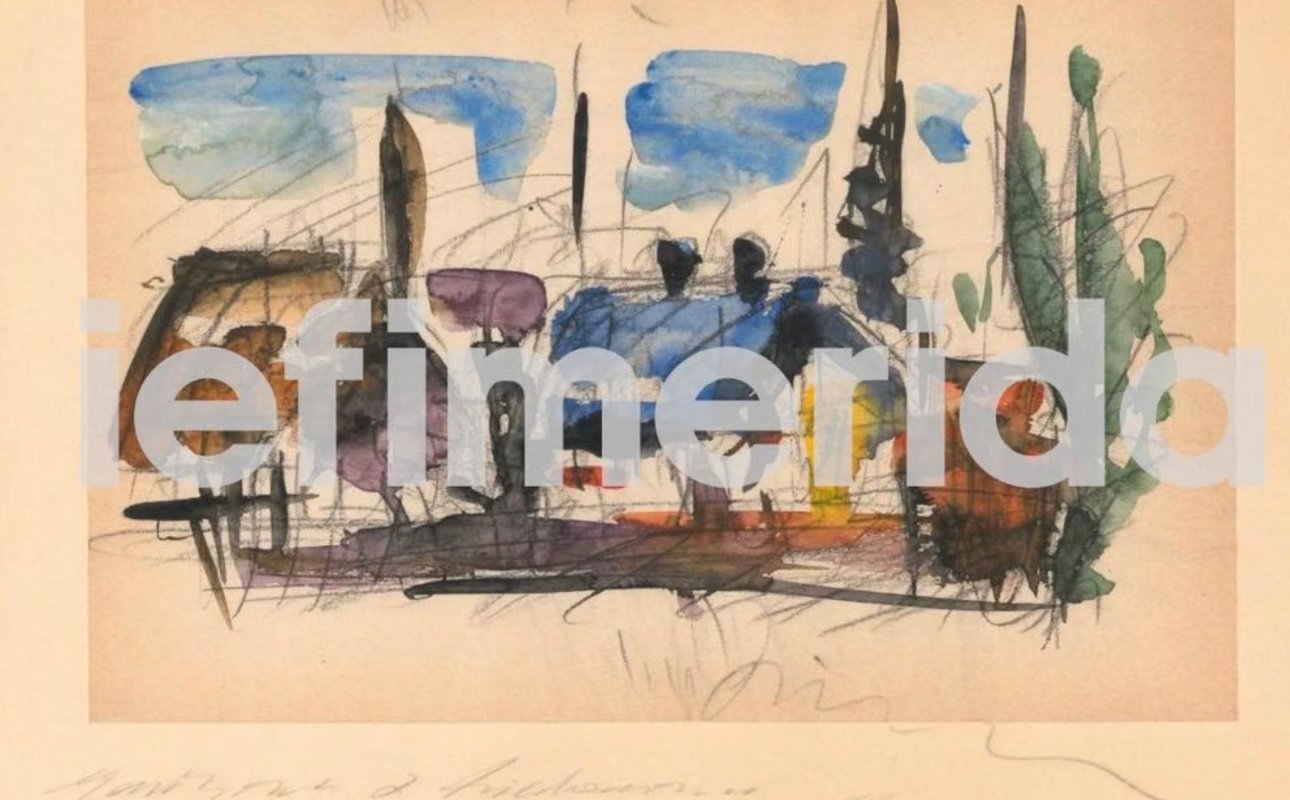
The paintings look right, and the certificates of authenticity look right too. Greek investigators say that is exactly the problem.
By Katia Niakari
Another forged work attributed to Giorgos Bouzianis, a pioneer of Greek expressionism, has been sold at a Paris auction for 1,041 euros ($1,210), the Greek news site iefimerida reported. A genuine piece would be worth about 5,000 euros. Authorities are expected to receive details so they can trace the money.
Police sources say it is part of a much larger operation. A ring broken up in June 2025 "filled Europe with fake works," they told iefimerida, placing Bouzianis forgeries in auctions in France and Britain.
What makes the scheme dangerous is its paperwork.
Stelios Garipis, an Athens lawyer, collector and art appraiser, said the fakes reached at least two Paris auction houses and were bought by prominent Greek gallery owners and collectors. Each came with a forged certificate bearing the name of a supposed expert who is dead and never authenticated Bouzianis' work.
"That is what fools even the most experienced buyers," Mr. Garipis said.
The case exposes a weak point in the art trade.
Auction houses and buyers rely on certificates and provenance records to judge whether a work is genuine.
When those documents can be faked convincingly, the checks that protect the market break down. Lower-priced works, which get less scrutiny than headline lots, are especially easy targets.
It also comes as interest in Greek modern art is rising.
Last month a painting by Alexis Akrithakis sold for more than half a million euros in Paris, triple its estimate.
Rising prices make the artists more attractive to forgers as well as to collectors.
The report follows the arrest in Athens last weekend of a man selling six fake paintings.
He named a Greek Orthodox priest in Florida as the leader of a separate ring that handled 35 forgeries.