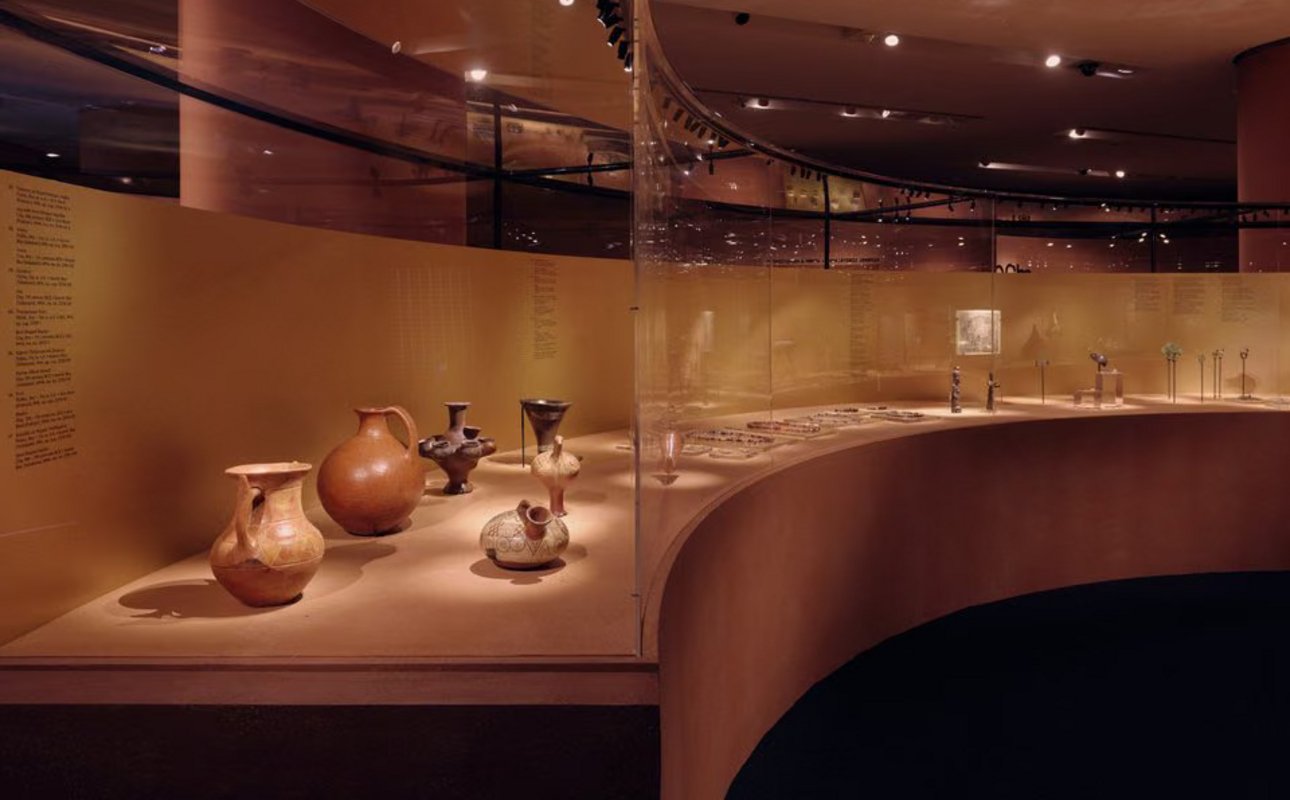
The Acropolis Museum in Athens has opened an exhibition of about 200 artifacts from ancient Armenia. It is the first in a new series devoted to ancient civilizations that remain little known to European audiences.
"Ancient Armenia," organized with the History Museum of Armenia, spans hundreds of thousands of years, from the Stone Age through the Bronze and Iron Ages to the Roman era and late antiquity.
It runs until Feb. 28, 2027.
"Armenia is known to us mainly from its more recent history, and culturally mostly for its Christian period," said the museum's director, Nikolaos Stampolidis.
"What we wanted to show is ancient Armenia."
At the heart of the show is the kingdom of Urartu, a powerful state of the ancient Near East that flourished in the 9th to 6th centuries B.C. around Lake Van, in what is now eastern Turkey, Armenia and northwestern Iran.
Mr. Stampolidis said the exhibition explores Urartu's little-studied links with Cyprus, the Aegean and Crete, through its renowned metalwork.
Visitors can also trace Armenia's rise to empire under Tigranes the Great in the 1st century B.C., when its territory stretched from the Caspian Sea to the Mediterranean.
Davit Poghosyan, director of the History Museum of Armenia, called it an exhibition of major international importance that reflects centuries of cultural ties between Armenia and Greece.
Related events include traditional Armenian dance, Christmas carols by pupils from Athens' Armenian schools, and piano and guitar recitals.